What Will Online Reputation Management Look Like When AI Becomes the First Point of Contact?
The way people discover information online is changing faster than ever. As artificial intelligence becomes a primary source of information, online reputation is emerging as one of the most important factors influencing how businesses, executives, and brands are perceived. Instead of clicking through multiple websites and search results, users are increasingly turning to AI-powered tools that provide instant answers and summaries.
This shift has major implications for organizations of all sizes. The information AI systems collect and present can influence purchasing decisions, business opportunities, investor confidence, and public perception within seconds. As a result, businesses can no longer afford to treat their online reputation as an afterthought.
The question is no longer whether your online reputation matters. The question is how your reputation will be interpreted when AI becomes the first point of contact.
Table of Contents
- Why Online Reputation Management Matters More in the AI Era
- How AI Is Reshaping Online Reputation Management
- Online Reputation Management Will Focus on Digital Narratives
- The Growing Challenge of Negative Content
- What Executives Should Expect
- Why Proactive Online Reputation Management Is Essential
- The Rise of Reputation Intelligence
- Will Businesses Need Professional Reputation Support?
- The Future of Online Reputation Management
- Conclusion
Why Online Reputation Management Matters More in the AI Era
Traditionally, search engines displayed a list of results and allowed users to choose what they wanted to read. In contrast, AI-powered search tools often provide direct answers generated from information gathered across the internet.
As a result, online reputation management is becoming increasingly critical. Rather than evaluating multiple websites, users may simply trust the summary provided by an AI assistant. If that summary includes outdated information, negative media coverage, or inaccurate details, it can shape opinions before someone ever visits your website.
Furthermore, AI-generated responses often pull information from various sources simultaneously. Therefore, every article, review, blog post, and social mention contributes to how your reputation is perceived.
How AI Is Reshaping Online Reputation Management
The future of online reputation management extends far beyond search rankings. Businesses can no longer focus solely on appearing at the top of Google results. Instead, they must ensure that trustworthy and accurate information exists across the entire digital ecosystem.
AI systems evaluate content from numerous sources, including:
- News publications
- Review platforms
- Business directories
- Industry websites
- Social media discussions
- Professional profiles
Because AI pulls information from multiple channels, organizations must maintain consistency and credibility across all of them.
Consequently, businesses that actively manage their online presence will have a greater opportunity to influence how AI systems describe their brand.
Online Reputation Management Will Focus on Digital Narratives
One of the biggest changes in the coming years will be the shift from managing individual search results to managing overall digital narratives.
Previously, businesses often focused on ranking positive content above negative content. While that strategy remains valuable, future online reputation management efforts will center on shaping the broader story available online.
For example, if industry publications, customer testimonials, and thought leadership articles consistently highlight a company’s expertise, AI systems are more likely to generate favorable summaries. On the other hand, if criticism dominates online discussions, that negativity may become part of the AI-generated narrative.
In other words, reputation management will increasingly be about controlling the conversation rather than controlling a single search result.
Also read: Why Online Reputation Matters for Real Estate Agents and How to Fix Bad Reviews
The Growing Challenge of Negative Content
Negative content has always posed challenges for businesses and individuals. However, AI may amplify the impact of negative information by combining content from multiple sources into a single response.
This is one reason many organizations seek ways to remove negative search results and reduce the visibility of damaging content online.
A negative news article, an unresolved customer complaint, or outdated information may continue influencing AI-generated responses for years. Therefore, businesses must regularly monitor what appears online and address potential reputation risks before they escalate.
Additionally, creating authoritative content can help provide balance and context. Positive media coverage, expert insights, and customer success stories can all contribute to a stronger online presence.
What Executives Should Expect
In the AI era, executive visibility will become more important than ever.
Customers, investors, and business partners frequently research company leaders before making decisions. As a result, executive profiles are likely to become a significant component of online reputation management strategies.
When AI systems are asked about a CEO or founder, they may summarize information gathered from interviews, articles, professional profiles, and public mentions. Therefore, executives should actively build a positive digital presence through thought leadership, industry participation, and professional branding.
Moreover, organizations should routinely review executive search results to identify any content that could negatively influence AI-generated summaries.
Why Proactive Online Reputation Management Is Essential
- Waiting for a reputation issue to become visible is a risky strategy.
- Waiting allows negative content to gain traction.
- Waiting allows outdated information to spread further.
- Waiting allows competitors to shape the conversation.
Because AI systems rely on existing online content, businesses must take a proactive approach to online reputation management.
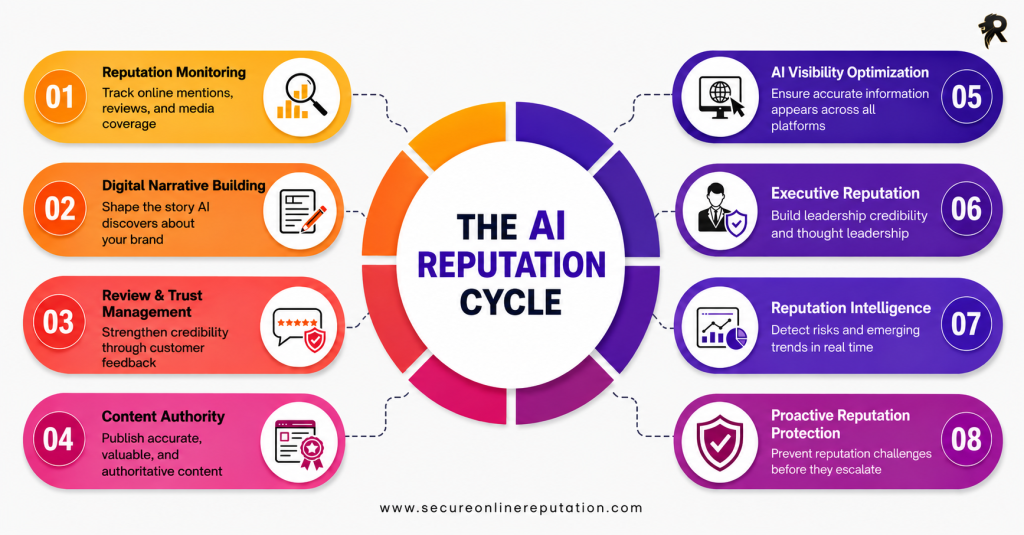
This includes monitoring online mentions, responding to customer feedback, publishing valuable content, and maintaining accurate business information. These efforts help ensure that AI systems encounter credible and up-to-date information when generating responses.
As a result, proactive reputation management can reduce the likelihood of reputational challenges before they occur.
The Rise of Reputation Intelligence
Technology is also transforming the way organizations monitor and manage their reputations.
Advanced analytics and monitoring tools now allow businesses to track online conversations, media coverage, and emerging trends in real time. This approach is often referred to as reputation intelligence.
By leveraging reputation intelligence, organizations can identify potential risks early and respond before negative narratives gain momentum.
Furthermore, these tools help businesses understand how their brand is perceived across different platforms. This insight is becoming increasingly valuable as AI systems draw information from a wider range of online sources.
Consequently, reputation intelligence is expected to become a core component of modern online reputation management strategies.
Will Businesses Need Professional Reputation Support?
As the digital landscape becomes more complex, many organizations will seek professional assistance to protect and strengthen their online presence.
The best online reputation management services combine content development, digital public relations, search optimization, and reputation monitoring to help businesses maintain a positive online image.
Professional reputation specialists understand how AI systems evaluate information and can develop strategies that improve visibility, credibility, and trustworthiness.
For businesses operating in competitive markets, professional support may provide a significant advantage in managing long-term reputation goals.
The Future of Online Reputation Management
The future of online reputation management will be shaped by trust, transparency, and digital authority.
As AI becomes increasingly integrated into search experiences, businesses will need to focus on building a strong and credible online presence. High-quality content, positive customer experiences, and consistent brand messaging will play larger roles in determining how organizations are represented online.
Moreover, reputation management will become less about reacting to problems and more about proactively building trust. Businesses that invest in credibility today will be better positioned to benefit from AI-driven search experiences tomorrow.
Ultimately, AI will not replace reputation management. Instead, it will make online reputation management more important than ever before.
Conclusion
The rise of AI-powered search is fundamentally changing how people discover and evaluate information. Instead of exploring multiple sources, users are increasingly relying on AI-generated answers to make decisions quickly.
As this trend continues, online reputation management will evolve from a supportive marketing function into a critical business strategy. Every piece of online content, from news articles to customer reviews, has the potential to influence how AI systems describe a brand or individual.
Businesses that prioritize transparency, credibility, and proactive reputation management will be best equipped for this new digital landscape. Those who fail to adapt may find their online story being written by sources they do not control.
In a world where AI becomes the first point of contact, your online reputation will no longer be a second impression, it will be the first.