What to Do When Negative Content Goes Viral Online
It always begins small. One screenshot, one negative content, possibly one clip taken out of context, and then it’s no longer small. In just a couple of hours, people who’ve never even spoken to your company are posting about it, talking about it, judging you on less than ten seconds of context. If you have ever watched your name become part of something like this, you know the natural response is to panic and start typing. Don’t. The companies that fare well during situations like this are those who stopped to think first.
Table of Contents
- Why Does Negative Content Even Spread This Fast?
- First, Figure Out What You’re Actually Dealing With
- Can You Actually Remove Negative Content From Google?
- If You Can’t Remove It, Here’s the Real Fallback
- How to Respond Publicly (Without Making It Worse)
- This Is Where “Fix My Online Reputation” Actually Starts
- When It’s Time to Just Call Someone
- Making Sure This Doesn’t Happen Again
1. Why Does Negative Content Even Spread This Fast?
The straightforward explanation for why outrage spreads fast online is because social networks favor it. A post that causes outrage generates many more reactions than posts that don’t, so the algorithm pushes it even harder, and in less than 24 hours, it starts beating all of your other posts. And when you figure out what’s happening, the damage is done because your posts that caused outrage are now number one on Google in your name. The frustrating thing about it is not that it’s happening; the frustrating thing is that it’s happening while you weren’t looking.
2. First, Figure Out What You’re Actually Dealing With
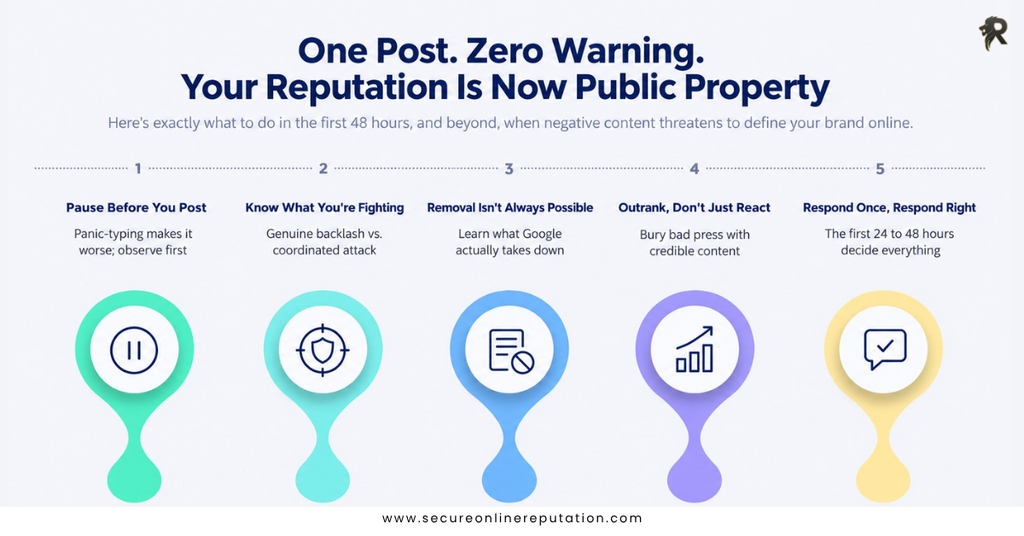
Before you react to anything, take some time to observe. Is this an honest mistake that angered people? Or is this an issue that got misinterpreted somehow? Or is this just another case of a mob being orchestrated to attack your company, all using the same phrasing, new accounts, all posted in an hour span? Look into it yourself. See where this information is circulating, who is posting it, whether the people posting it are even actual customers. Failure to do so is how many companies make things worse for themselves.
3. Can You Actually Remove Negative Content From Google?
Of course, but not always and not necessarily easy. Google will take action on the content only when it violates the rule, but not when it’s just embarrassing. You have a good chance of content removal when:
- Says something false and presents it as fact
- Shares your personal information without consent
- Breaks a platform’s stated community guidelines
- Crosses into harassment, threats, or impersonation
The thing is, it’s not for Google to decide whether something is right or wrong. You would need to take action via the website where this information was posted in the first place, and if it is defamatory, there might even be a legal aspect involved here. This is when most people realize the need for online reputation management, not because they want to, but because they don’t have enough time to do it themselves.
4. If You Can’t Remove It, Here’s the Real Fallback
However, most viral content is not rule-breaking content. Instead, it is simply unfavorable content, and unfavorable content is not takedownable. As such, in the case where the viral content cannot be removed, the next best solution is to try to outrank the negative content by publishing more favorable and credible content, thus pushing the old story down the search engine results page. This could include new interviews, press mentions, social media activity, and an up-to-date website. It takes time but it does work.
5. How to Respond Publicly (Without Making It Worse)
Being silent gives the impression that you’re trying to cover up something. Getting defensive and retaliating verbally leaves you even worse off. But the answers that actually hit home are measured, focused, and brief — you respond to the issue at hand, you accept responsibility when it’s due, and you don’t start a fight with some Internet troll. And a couple other key points to remember:
- Say your piece once, clearly — don’t get pulled into a back-and-forth
- Stick to what actually happened, not how unfair it feels
- Leave comments alone unless they’re breaking platform rules
- Follow up publicly once things are actually resolved
Honestly, the first 24 to 48 hours matter more than almost anything you do afterward.
6. This Is Where “Fix My Online Reputation” Actually Starts
The aftermath comes when the first shock has passed, but that doesn’t mean the hard work begins to end; far from it. This is where fix my online reputation becomes a real task you do on an ongoing basis instead of simply typing into Google out of desperation. Make your existing supporters tell their side of the story openly, preferably while it’s still current in relation to all the other stories about you. Add fresh material to your website. Blog. Be there. You are not being asked to deny anything at all, simply ensure it’s not everything anyone sees.
7. When It’s Time to Just Call Someone
There are some scenarios that are beyond what an individual can solve alone: fake accounts, coordinated harassment campaigns, even a story that gets picked up by real news sources. In cases like this, it might be time to seek assistance from others. A good reputation management firm will have experience with what kind of content should be taken down versus what requires legal action, and what can actually make a difference in regaining visibility rather than spending months trying to do so.
8. Making Sure This Doesn’t Happen Again
After the dust has settled, you can’t just put it behind you and pretend it never happened. You need to set up alerts with your name. Rather than always waiting to be surprised, you should check your search results from time to time. Always have an eye open for the websites where problems usually begin. The sooner you catch a little issue, the better.
Final Thoughts
Being the victim of something negative content going viral about you or your company can truly be terrible. However, it is seldom forever. Sometimes, it goes through the proper channels. Other times, it is simply a matter of waiting until there is enough activity happening that the negative post gets buried under it all. This is not about trying to forget about the bad event. It is about ensuring that it does not become the entire story.