How to Remove Your Name From Negative Search Results
Imagine a potential client searching for your name before deciding whether to work with you. Instead of finding your professional achievements, they come across an old news story, an unfair complaint, or information that no longer reflects your situation. They might form an opinion without ever speaking to you. This is why learning how to remove negative search results matters. What appears on Google can influence business opportunities, job prospects, and the trust people place in you. Even a single page can raise questions that are difficult to address after someone has already read it.
The solution depends on the content, its source, and the reason it appears in search results. You may be able to request a correction, approach Google for removal when its policies allow it, or improve the visibility of more relevant information about yourself.
Table of Contents
- Why Is Negative Information Appearing on Google?
- How to Remove Negative Search Results
- When Will Google Remove a Search Result?
- What If the Website Owner Says No?
- Can You Push Down Negative Search Results?
- When Is Professional Reputation Management Worth Considering?
- Take Control of Your Online Reputation
Why Is Negative Information Appearing on Google?
Not every negative search result has the same origin. It could be an old newspaper article, a public complaint, a critical review, or a website that has published incorrect details about you.
Sometimes, the information was accurate when it first appeared but no longer reflects the current circumstances. In other cases, the page may contain disputed claims or leave out details that would help readers understand the situation.
The first step to remove negative search results is to work out what you are dealing with. Is the information false? Has it become outdated? Does it violate a website’s policies? The answer will help you decide whether to pursue removal, request an update, or take another route.
How to Remove Negative Search Results
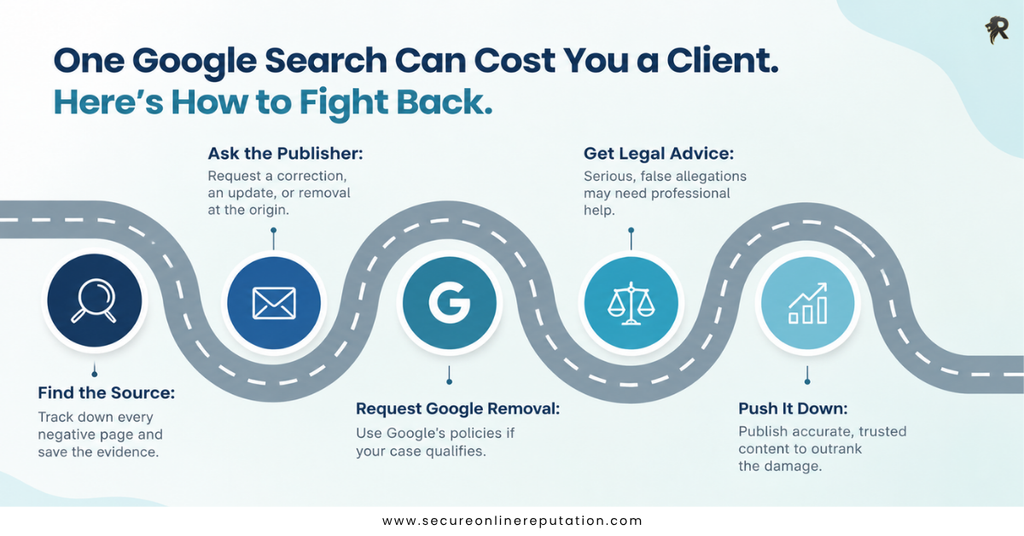
If you want to remove negative search results, start with the original webpage rather than focusing only on the Google listing. Google indexes information published elsewhere, so the most effective solution often depends on the website hosting the content.
1. Find the Source and Save the Evidence
Search your full name on Google and look beyond the first result. Try variations of your name, professional title, and business name to see what other people might discover.
Make a list of the pages causing concern. Save their URLs, take screenshots, and note the dates and specific statements you believe are inaccurate.
Keep any supporting documents that establish the facts. For example, if an article refers to a business dispute that was later resolved, relevant records may help you explain why an update is appropriate.
Having this information ready makes the next steps more organized and gives you something concrete to refer to when contacting a publisher.
2. Ask the Publisher to Correct or Remove the Content
Once you identify the original website, contact its editor, owner, or designated complaints team. Explain the issue in plain language and point to the exact passage that needs attention.
If the article contains an incorrect claim, provide evidence that supports your position. If the information is outdated, explain what has changed and ask whether the publisher can update the page.
When you want to remove negative search results, a specific request is usually more useful than a general demand to delete everything. The publisher may agree to correct a statement, add relevant context, or remove the page, depending on the circumstances.
Keep a copy of your correspondence and any response you receive. If the publisher makes changes, check the page again and allow time for Google to reflect the update.
3. Request Removal From Google Where Eligible
Contacting the publisher does not always work. If the website refuses to cooperate, review Google’s removal procedures to see whether you can remove negative search results through that route.
Google provides different processes for certain types of personal information, policy violations, and legally supported requests. Follow the requirements for the relevant category and provide the requested URLs and supporting details.
A damaging article is not automatically eligible for removal simply because you disagree with it. Google considers the applicable policy or legal basis, so explain the specific issue rather than relying only on the effect it has had on your reputation.
Also remember that removing a listing from Google does not necessarily delete the original webpage. The content may still be accessible through the publisher’s website or other search engines.
4. Consider Legal Advice for Serious Cases
Some situations require more than a standard removal request. If a publication contains serious allegations that you believe are false and damaging, a qualified lawyer can assess the available options.
Depending on the facts and the applicable law, these may include a formal correction request, a legal notice, negotiations with the publisher, or court proceedings.
Avoid assuming that every critical article is defamatory. Legal definitions vary by jurisdiction, and truthful reporting or protected opinion may be treated differently from demonstrably false factual claims.
When Will Google Remove a Search Result?
Google may remove certain listings when the content meets its policies or applicable legal requirements. The outcome depends on the type of information, the circumstances, and the grounds for the request.
For example, some content involving sensitive personal information may qualify under specific removal policies. Other disputes may require action against the publisher or a legal process.
If your goal is to remove negative search results, identify the reason the content should qualify for removal before submitting a complaint. A clear explanation supported by relevant evidence gives Google the information needed to assess your request.
If the request is rejected, review the response carefully. You may still be able to approach the publisher again, obtain legal advice, or explore a different approach to managing the search results.
What If the Website Owner Says No?
A publisher may refuse to change an article, particularly if it believes the information is accurate or the publication is legally protected. Receiving a refusal can be frustrating, but it does not mean you have run out of ways to remove negative search results or reduce their impact.
Review the response and consider whether you can provide additional evidence. If there is a genuine legal concern, seek advice before escalating the matter.
You can also work on improving the visibility of accurate information about yourself. This will not erase the original article, but it may help people find a fuller picture of your professional background and current activities.
Can You Push Down Negative Search Results?
When removal is not possible, improving the visibility of other relevant pages may be a practical alternative. This approach forms part of online reputation management and focuses on helping useful, trustworthy information appear more prominently.
Start with the online properties you control. Update your professional biography, publish helpful articles on your website, and keep relevant business or professional profiles complete and accurate.
You can also strengthen existing website content, contribute to reputable publications, and earn legitimate mentions from relevant sources. Over time, these efforts may help search engines recognize additional pages associated with your name.
If you are trying to remove negative search results, remember that pushing a page lower in rankings is different from deleting it. Search positions change, and no strategy can guarantee that a particular result will disappear from the first page.
When Is Professional Reputation Management Worth Considering?
Managing the issue yourself may be sufficient when there is only one page to address. The situation becomes more complicated when several websites repeat the same allegations or an old article continues to attract attention.
Professional reputation specialists can review the search results, identify realistic ways to remove negative search results, help organize publisher outreach, and develop a content and SEO strategy.
Before hiring a provider, ask what work it proposes to carry out and how it will report progress. Be cautious of anyone promising guaranteed removal or claiming to have special access to Google’s systems.
The right service should explain the limitations honestly and recommend actions that suit your particular situation. The aim is to address the problem responsibly, not to make promises that cannot be kept.
Take Control of Your Online Reputation
Negative search results can affect how people see you, sometimes before you have the opportunity to explain what happened. Ignoring the issue may leave inaccurate or outdated information unchallenged, while a considered response gives you a clearer way forward.
Start by reviewing the source, collecting evidence, and contacting the publisher. Explore Google’s removal policies where appropriate, and seek legal advice if the content raises serious concerns. If the original page cannot be removed, focus on making accurate, useful information easier to find.
Learning how to remove negative search results is not about hiding every criticism. It is about addressing information that should not remain uncorrected and ensuring that your online presence reflects a more complete and accurate picture of who you are.
With patience and a realistic plan, you can take meaningful steps towards protecting your credibility and rebuilding trust online.