How to Push Down Negative Search Results With Positive Content
Imagine a potential client, employer, or business partner searching your name. Instead of your achievements, the first page shows an old news story, a harsh review, or a complaint that doesn’t reflect who you are today. Most people don’t look past page one, so what appears there often shapes the first impression. If the page can’t be deleted, you can still change what surrounds it. Learning how to push down negative search results on google means building strong, accurate, and relevant content that earns better visibility than the damaging page. It takes planning and patience, but it gives you a practical way to take back your search results.
Table of Contents
- Why Do Negative Results Rank So High?
- Can You Really Push Down Negative Search Results?
- How to Push Down Negative Search Results on Google Step by Step
- How Long Does It Take to See Results?
- Mistakes That Can Make the Problem Worse
- Should You Remove or Push Down a Result?
- When Is Professional Reputation Management Worth Considering?
- Take Control of Your Search Results
Why Do Negative Results Rank So High?
Negative pages often rank well for reasons that have nothing to do with your character. News sites and review platforms usually have strong domain authority, so Google treats their pages as trustworthy. Your name may also be searched alongside the story, which reinforces the page’s relevance.
Meanwhile, your own website, professional profiles, and published work may be thin, outdated, or poorly optimized. When nothing competes with the damaging result, it keeps its position.
Understanding this matters because it shows what needs to change. You don’t have to defeat the negative page directly. You need to give search engines better, more current pages to show.
Can You Really Push Down Negative Search Results?
Yes, in many cases, though not with a guarantee. Google ranks pages according to relevance, quality, and authority. If you publish and optimize enough credible content about yourself, those pages can compete for the top positions and move the negative result to page two or beyond.
There are limits to be honest about. Pushing a result down is not the same as deleting it. The page still exists, and anyone who searches deeply enough can find it. Results also shift over time, so nobody can promise a specific outcome. The goal is to make the most accurate and helpful information about you the most visible, which is the core of online reputation management.
How to Push Down Negative Search Results on Google Step by Step
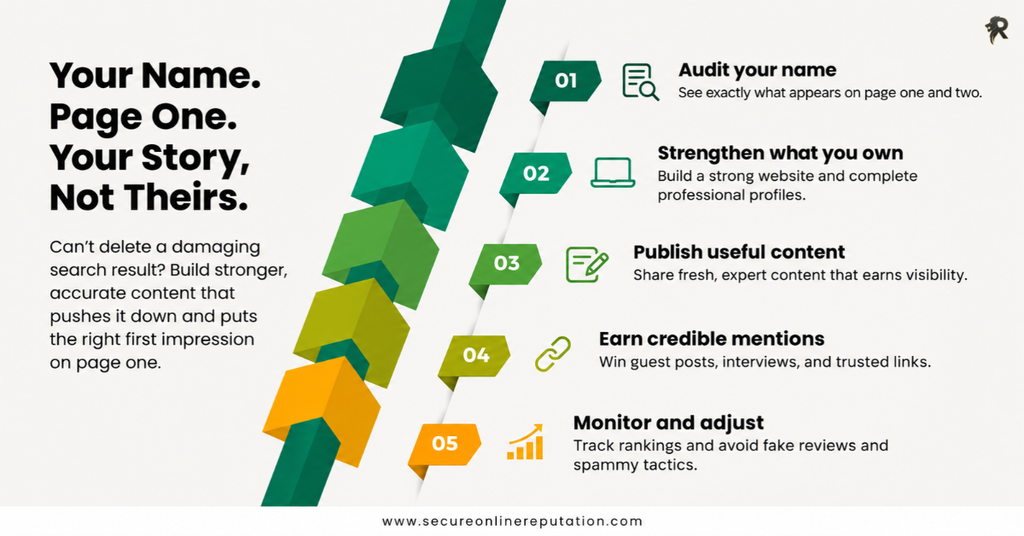
If you want to fix your online reputation, a structured approach works better than publishing random content. Here is how to push down negative search results on google in practical stages.
1. Audit What Appears for Your Name
Search your full name, along with variations such as your professional title, company name, and common misspellings. Do it in a private browser window so personalized results don’t skew what you see.
Record every page on the first two pages of results. Note which ones are positive, neutral, or negative, and who owns each one. This tells you how many strong pages you already control and how many you need to create.
2. Strengthen the Properties You Own
Your own website is your most valuable asset. Make sure it has a clear About page, a professional biography, your achievements, and contact details. Use your full name in page titles and headings, and add structured data where possible so search engines understand who you are.
If you don’t have a personal website, register your name as a domain and build one. A site that matches your name is one of the quickest ways to claim a top position.
3. Publish Helpful, Relevant Content Regularly
Search engines reward fresh, useful content. Write articles that reflect your expertise, share insights from your industry, or explain your work. Publish them on your own site and, where it makes sense, on reputable third-party platforms.
Focus on quality rather than volume. A handful of well-written, well-optimized pieces will do more than dozens of thin posts.
4. Build and Complete Professional Profiles
Profiles on trusted platforms often rank well for personal names. Complete and update profiles on sites such as LinkedIn, industry associations, speaker directories, and professional networks relevant to your field.
Use consistent details across every profile, including your name, photo, job title, and a link back to your website. Consistency helps search engines connect these pages to you.
5. Earn Mentions From Credible Sources
Mentions from respected websites add authority to the pages that represent you. You can contribute guest articles, offer expert comments to journalists, take part in interviews and podcasts, or share news about awards and milestones.
These placements do two things. They create new positive pages, and they send trust signals that help your other content rank.
6. Encourage Genuine Reviews and Testimonials
If the negative result is a review, genuine feedback from satisfied clients can balance the picture. Ask happy customers to share their experience on the relevant platforms, and respond professionally to criticism. A calm, factual reply shows readers how you handle problems.
Never create fake reviews. Platforms detect them, and the damage to your credibility can be far worse than the original complaint.
7. Monitor Your Progress and Adjust
Set up alerts for your name and check your rankings regularly. Note which pages are climbing and which are stalled, then adjust your content plan. If a particular profile or article performs well, build on it with internal links and updated information.
How Long Does It Take to See Results?
There is no fixed timeline. Some people see movement within a few weeks, while competitive or heavily covered stories can take six months or longer. The authority of the negative page, the amount of content you publish, and the competitiveness of your name all play a part.
Anyone who tells you how to push down negative search results on google overnight is overselling. Steady, consistent effort produces more lasting results than quick tricks.
Mistakes That Can Make the Problem Worse
Some well-meaning actions backfire. Avoid these:
- Publishing low-quality or spammy content. Search engines may devalue it, and readers will notice.
- Using fake reviews or fake profiles. This can lead to penalties and a fresh reputation problem.
- Attacking the publisher or reviewer publicly. It can draw more attention to the original content.
- Ignoring the issue and hoping it fades. Strong negative pages often stay visible unless something competes with them.
- Expecting a single page to do all the work. You need several credible pages ranking together.
Should You Remove or Push Down a Result?
Both strategies have a place, and they often work best together. If a page is false, violates a platform’s policies, or qualifies under Google’s removal rules, it may be possible to remove negative search results through the publisher or Google. If the content is accurate and legally protected, removal is unlikely, and pushing it down becomes the realistic option.
Start by working out what applies to your situation. Contact the publisher where appropriate, check Google’s removal options, and build positive content at the same time. Even if a removal request succeeds, a strong set of positive results protects you from future problems.
When Is Professional Reputation Management Worth Considering?
You can handle a single minor result yourself. The situation changes when several negative pages appear, the content keeps spreading, or your reputation directly affects your income, such as in executive or business roles.
A professional online reputation management provider can audit your results, plan a content strategy, handle publisher outreach, and track progress. When choosing one, ask for a clear explanation of the work and how they report results. Be wary of anyone who guarantees removal or claims special access to Google. A trustworthy provider will explain limitations openly and recommend steps that suit your circumstances.
Take Control of Your Search Results
Negative search results can shape opinions before you’ve had the chance to speak for yourself. You don’t have to accept that. Start with an audit, strengthen the pages you own, publish useful content, and earn credible mentions from trusted sources.
Understanding how to push down negative search results on google gives you a realistic way to protect your credibility when deletion isn’t possible. The aim isn’t to hide every criticism. It’s to make sure the first thing people see is an accurate, current picture of who you are.
With patience and a consistent plan, you can rebuild trust and take back control of your search results.