How One Bad Review Can Cost You Dozens of Customers
A customer finds your business online and is ready to book. Then they see a one-star review about a late delivery, rude staff, or a problem that was never fixed. They don’t call you or ask for your side of the story. They click the next result, and you never know that customer exists. This is how one bad review can cost you dozens of customers. Reviews are often read before your website, your pricing, or your service pages, and a single negative one can shape a decision before you get a chance to speak. That is why managing your reviews is now part of running a business rather than an optional extra. You have options. You can respond well, report reviews that break platform rules, and build a stronger set of reviews around the bad review that hurts.
Table of Contents
- Why Does One Bad Review Hurt So Much?
- How a Single Review Turns Into Lost Customers
- Can You Remove a Bad Review?
- What to Do About Fake Reviews
- How to Respond to a Bad Review
- A Practical Strategy for Managing Reviews
- Mistakes That Make a Bad Review Worse
- When Is Professional Help Worth Considering?
- Take Control of Your Reviews
Why Does One Bad Review Hurt So Much?
People trust other customers more than they trust your own marketing. A negative review stands out because it is usually specific and emotional, which makes it more memorable than several pleasant but generic five-star comments.
Many readers also go straight to the lowest ratings to look for red flags. If a bad review sits near the top and nobody has replied, it looks as though the business doesn’t care. Smaller businesses feel this most, because with only a few reviews, one complaint carries a lot of weight in the average.
Strong review management starts with treating reviews as part of your sales process, not as an afterthought.
How a Single Review Turns Into Lost Customers
Here is a simplified illustration, not a statistic. Say 200 people view your listing each month and 10% would normally get in touch, which is 20 inquiries. If an unanswered bad review puts off just a quarter of them, you lose 5 inquiries a month. Over a year, that is 60 customers who never reached you.
The effect compounds. Reviews appear in search results next to your business name, they get screenshot and shared, and they influence the star rating that platforms use to rank you. A lower ranking brings fewer views, and fewer views mean fewer chances to collect new positive reviews.
Can You Remove a Bad Review?
Sometimes, but not always. Review platforms generally remove reviews that break their rules, such as spam, offensive language, conflicts of interest, or reviews that don’t relate to a real experience. An honest but critical review will usually stay, even if you disagree with it.
Trustpilot review removal follows the same principle. You can report a review that breaks the platform’s guidelines, and you should explain exactly which rule it breaks and provide evidence. Simply saying the review is unfair is rarely enough.
If the review also shows up in Google, remember that Google displays content hosted elsewhere. To remove negative search results tied to a review, you usually have to deal with the review platform first, then allow time for Google to update.
What to Do About Fake Reviews
Not every negative review comes from a genuine customer. Fake reviews can come from competitors, former employees with a grudge, or people who never used your service.
Common signs of fake reviews include:
- No matching customer, order, or booking in your records
- Vague wording that doesn’t describe any real service you provide
- Several similar reviews posted close together
- Reviewer profiles with no history
If you suspect a review is not genuine, collect your evidence, such as records, dates, and screenshots, and report it through the platform’s official process. If the review contains false statements of fact that are seriously damaging, a qualified lawyer can advise you. Avoid assuming that every harsh review is defamatory, because honest opinions are treated differently from demonstrably false claims.
How to Respond to a Bad Review
A reply is not only for the reviewer. Future customers read it too, and it shows how you deal with problems.
- Respond promptly. Aim for within a day or two.
- Thank them and acknowledge the issue. Show that you listened, even if you disagree.
- Stay factual and calm. Never argue or blame the customer.
- Take the conversation offline. Offer a phone number or email to resolve it.
- Follow up. If the issue is fixed, politely ask whether they would update their review.
A thoughtful reply to a bad review can turn a damaging comment into proof that you take customers seriously.
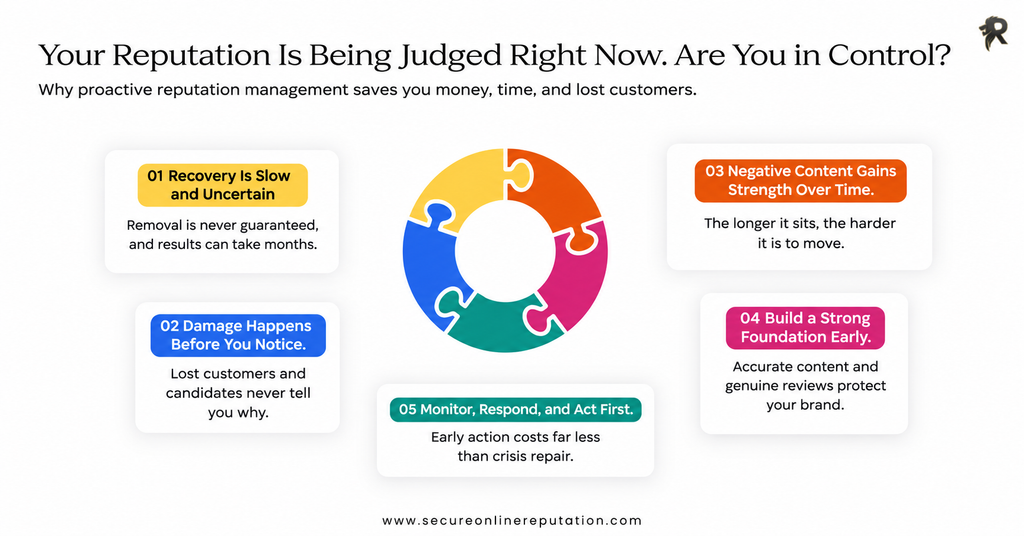
A Practical Strategy for Managing Reviews
Review management works best as a routine rather than a reaction. The steps below help you stay ahead of problems.
Monitor every platform. Set up alerts for your business name on Google, Trustpilot, industry sites, and social media so you see new reviews quickly.
Make it easy to leave a review. Send a short link after a sale or service. Most happy customers never post unless they are asked.
Reply to everyone. Responding to positive reviews as well as negative ones shows you are active and engaged.
Keep your profiles accurate. Update hours, photos, services, and contact details so that reviews are judged against correct information.
Build a larger base of genuine reviews. The more real reviews you have, the less weight any single complaint carries.
Mistakes That Make a Bad Review Worse
Avoid these common errors:
- Replying in anger. Defensive or sarcastic replies can attract more attention than the review itself.
- Buying or writing fake reviews. Platforms detect them, and the damage to your credibility can be far worse than the original complaint.
- Offering rewards for deleting a review. This may breach platform rules and can look like pressure.
- Ignoring it. An unanswered complaint reads as indifference.
- Pressuring customers for five stars. Overly pushy requests can backfire and produce suspicious patterns.
When Is Professional Help Worth Considering?
You can handle a single bad review yourself. The situation changes when negative reviews appear across several platforms, fake reviews keep returning, or your income depends heavily on how you appear online.
A professional online reputation management provider can audit your reviews, report fake reviews, handle trustpilot review removal requests where they are eligible, and help you remove negative search results where the grounds exist. They can also build a content strategy to improve what people see first.
Before hiring anyone, ask what they will do and how they will report progress. Be wary of any company that guarantees removal or claims special access to Google or review platforms. A trustworthy provider will explain the limits openly.
Take Control of Your Reviews
One bad review can shape how people see you before they ever speak to you, but it doesn’t have to define your business. Respond professionally, report anything that breaks the rules, collect genuine feedback from satisfied customers, and keep an eye on every platform where you appear.
Start today. Search for your business name, read your most recent reviews, and reply to any that are still waiting. If you find fake reviews or content that breaks platform rules, gather your evidence and report them. If the problem is bigger than you can manage alone, a trustworthy reputation specialist can help.
With steady effort, a single complaint becomes one voice among many, and the full picture of your business becomes much clearer. Your future customers are reading your reviews right now, so make sure what they find reflects the service you actually provide.