Why Online Reputation Matters for Real Estate Agents and How to Fix Bad Reviews
In today’s competitive property market, trust is everything. Before choosing a real estate agent, most buyers and sellers search online to review ratings, check reviews, and assess overall credibility. As a result, online reputation management has become one of the most important factors in building a successful real estate business.
In a matter of seconds, a single unfavorable review, deceptive article, or unanswered complaint might sway prospective customers. Customers may become skeptical of you even if you have a lot of experience and are reliable. As a result, many agents lose out on important leads before they have a chance to speak with a client.
Fortunately, reputational harm is not irreversible. Real estate brokers can gradually increase their clientele, improve their online presence, and restore confidence with the correct tactics. In fact, to maintain credibility in a fiercely competitive industry and enhance their online image, many professionals now invest in business reputation repair.
Table of Contents
- Why Online Reputation Matters in Real Estate
- How Bad Reviews Affect Real Estate Agents
- Common Reasons Real Estate Agents Receive Bad Reviews
- How to Fix Bad Reviews the Right Way
- The Importance of Consistent Online Activity
- When Professional Reputation Help Becomes Necessary
- How Online Reputation Management Supports Long-Term Growth
- Tips to Maintain a Positive Real Estate Reputation
Why Online Reputation Matters in Real Estate
Relationships and trust are the foundation of real estate. Clients frequently make financial and emotional decisions worth thousands or even millions of dollars, in contrast to other industries. As a result, they want to collaborate with someone who seems trustworthy, competent, and professional.
These days, almost every decision is influenced by internet searches. When looking for a real estate agent, people typically look for:
- Google reviews
- Social media presence
- Testimonials from past clients
- News mentions
- Search engine results
Positive material on the first page boosts the confidence of potential customers. However, they might quickly switch to a different agent if they see grievances or unfavorable remarks.
This explains why online reputation management is so important to contemporary real estate marketing. In addition to fostering trust, a positive online reputation boosts leads, recommendations, and sustained business expansion.
How Bad Reviews Affect Real Estate Agents’ Online Reputation
Negative reviews can hurt a real estate company in several ways. After reading just one unfavorable review, prospective buyers can become wary. Because they have so many options, buyers and sellers rarely take a chance with an online agent that seems untrustworthy.
Here are some common effects of bad reviews:
Loss of Client Trust
Trust is the foundation of every property transaction. When people read negative feedback, they may assume the agent lacks professionalism or communication skills.
Lower Search Visibility
Businesses with high ratings and positive involvement are frequently given priority by Google. An excessive number of negative reviews could make you less visible in local search results.
Reduced Referrals
An agent with a bad online reputation is less likely to be recommended. This may eventually have an impact on long-term company growth.
Damage to Personal Branding
Real estate agents often build their business around personal reputation. Negative search results can harm years of hard work and networking.
Because of these challenges, many professionals seek online reputation repair companies to help restore their credibility and improve search visibility.
Common Reasons Real Estate Agents Receive Bad Reviews
Not every negative review is caused by poor service. In many cases, misunderstandings or unrealistic expectations lead to criticism online.
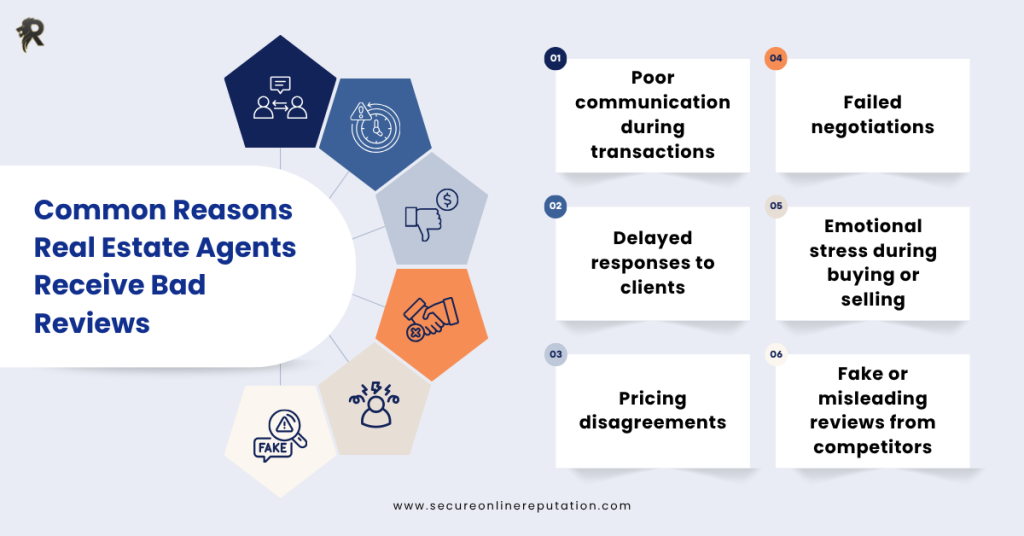
Some common reasons include:
- Poor communication during transactions
- Delayed responses to clients
- Pricing disagreements
- Failed negotiations
- Emotional stress during buying or selling
- Fake or misleading reviews from competitors
Although some reviews may feel unfair, ignoring them usually makes the situation worse. Instead, agents should focus on handling criticism professionally and improving their public image.
How to Fix Bad Reviews the Right Way
Repairing a tarnished reputation requires patience, persistence, and the right strategy. Real estate brokers should focus on long-term solutions that progressively rebuild confidence rather than reacting emotionally. Instead of reacting emotionally, real estate brokers should focus on long-term solutions that gradually reestablish confidence.
Respond Professionally to Negative Reviews
First, always react politely and gently. A polished response demonstrates to prospective customers your concern for their experience.
Avoid arguments or defensive language. Instead:
- Acknowledge the concern
- Offer to discuss the issue privately
- Show willingness to improve
Even if the review seems unfair, a thoughtful response can leave a positive impression on future clients.
Encourage Positive Client Reviews
Gathering more positive reviews from happy customers is one of the finest strategies to counterbalance bad comments.
After successful transactions, politely ask clients to leave honest reviews on:
- Zillow
- Realtor platforms
Over time, positive reviews naturally reduce the impact of older negative comments.
Create High-Quality Online Content
Publishing valuable content helps strengthen your online presence. This includes:
- Real estate blogs
- Market updates
- Client success stories
- Educational videos
- Neighborhood guides
This enhances credibility and raises the ranking of positive material in search results.
When trying to eliminate unfavorable search results, agents frequently concentrate on posting powerful, optimized content that appears above damaging or out-of-date content.
The Importance of Consistent Online Activity
Your credibility may suffer if you have an inactive online presence. Prospective customers tend to trust representatives who seem informed, involved, and active.
Therefore, maintain consistency across all platforms by:
- Updating your website regularly
- Posting on social media
- Sharing market insights
- Responding to comments and messages
- Engaging with local communities online
Consistency builds familiarity, and familiarity builds trust.
Additionally, Google favors businesses that remain active online. This can improve both visibility and reputation over time.
When Professional Reputation Help Becomes Necessary
Sometimes, negative content becomes difficult to manage alone. For example, damaging articles, repeated complaints, or misleading search results may continue appearing despite your efforts.
In these situations, many agents turn to professional reputation experts for support.
Experienced agencies offering business reputation repair services can help by:
- Improving positive search visibility
- Creating optimized content
- Managing review strategies
- Monitoring brand mentions
- Strengthening search engine presence
Professional support becomes especially valuable when negative results begin affecting client inquiries and revenue.
How Online Reputation Management Supports Long-Term Growth
Many real estate agents think reputation management only matters during a crisis. However, the most successful professionals treat it as an ongoing strategy rather than a temporary fix.
Strong reputations create several long-term benefits:
More Qualified Leads
People are more likely to contact agents who appear trustworthy online.
Higher Conversion Rates
Positive reviews and strong branding help convert visitors into paying clients.
Better Local SEO Performance
Good reviews and active engagement improve local search rankings.
Increased Referrals
Satisfied clients often recommend agents with strong online credibility.
As competition continues to grow in the real estate industry, reputation will become even more important in attracting future clients.
Tips to Maintain a Positive Real Estate Reputation
Maintaining a strong reputation requires consistent effort. Fortunately, small daily actions can make a significant difference over time.
Here are some simple strategies:
- Always communicate clearly with clients
- Set realistic expectations early
- Follow up after transactions
- Resolve issues quickly
- Stay active on review platforms
- Share useful real estate insights online
- Monitor your name on Google regularly
These habits help create a positive digital footprint that supports long-term business success.
Conclusion
Your online reputation can affect every aspect of your real estate company in the modern era. Clients frequently assess your online reputation before contacting you, meeting you, or entrusting you with a real estate transaction.
For this reason, real estate brokers are now required to control their online reputations. A solid reputation increases long-term growth, draws clients, and fosters trust. Unresolved unfavorable assessments, on the other hand, can gradually erode credibility and limit chances.
Fortunately, reputational issues may be resolved with the correct approach. Agents can increase their online presence and regain confidence by reacting properly, promoting favorable reviews, producing insightful material, and, when needed, investing in company reputation restoration.
In the end, reputation is not built overnight. However, consistent effort, transparency, and professionalism can turn your online presence into one of your most valuable business assets.