How to Build a Positive Search Presence When Negative Content Ranks
Before they even get in touch with you, the results of a Google search for your name or company can influence their perception. Even if it doesn’t tell the whole story, a scathing article, unfavourable review, complaint, or out-of-date material can raise questions. This is where how to build a positive search presence becomes important. People can find reliable, accurate, and helpful information about you or your company when you have a strong search presence. You can create a more comprehensive digital persona that represents your actual work and credibility rather than letting one undesirable page define your reputation.
Table of Contents
- Understand Your Current Search Presence
- Why Negative Content Ranks
- How to Build a Positive Search Presence
- How to Get Rid of Negative Search Results
- How to Push Down Negative Search Results on Google
- Create Content That Builds Trust
- How to Remove Negative Content From Google
- Monitor Your Search Presence
1. Understand Your Current Search Presence
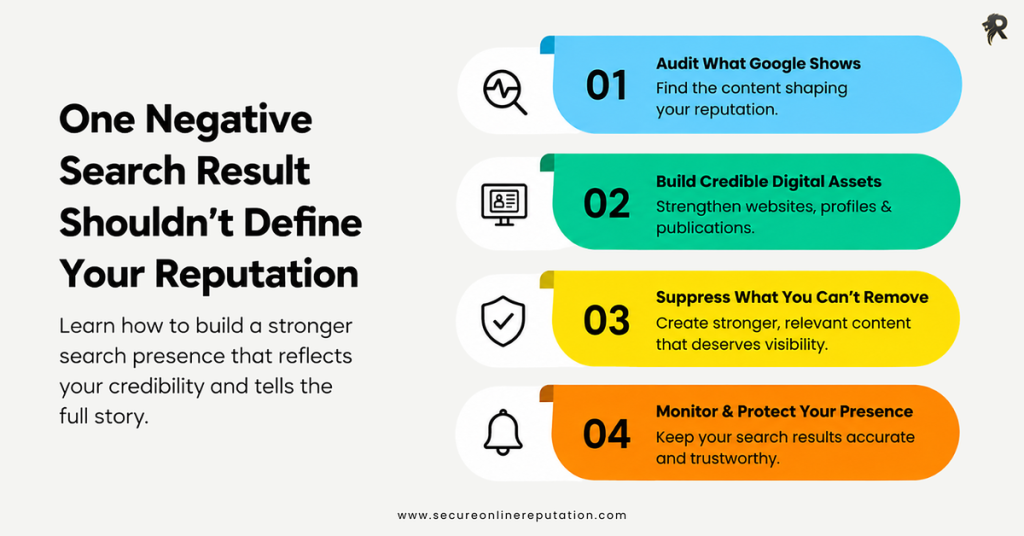
The first step in how to build a positive search presence is understanding what people currently see.
Search your name, business name, brand, products, services, and key executives. Review several pages of results rather than looking only at the first few listings.
Pay attention to:
- Negative news articles
- Unfavorable reviews
- Complaint websites
- Forum discussions
- Outdated information
- Social media posts
- Business directory listings
- Inaccurate or misleading content
Make a simple list of the pages that may affect your reputation. Note their position, source, publication date, and the type of information they contain.
Once you understand the current situation, you can choose a more focused reputation strategy.
2. Why Negative Content Ranks
Google does not rank a page simply because its content is positive or negative. Search engines consider factors such as relevance, authority, content quality, links, freshness, and search intent.
For example, an old article from a well-known publication may continue to rank because the website has strong authority. Similarly, a forum discussion may remain visible because it closely matches a person’s name or business.
Therefore, how to build a positive search presence is not only about addressing negative content. It is also about giving search engines more useful and relevant information to understand and rank.
3. How to Build a Positive Search Presence
A positive search presence develops through consistent, credible online activity. Start by strengthening the digital assets that you already control.
These may include:
- Your official website
- Professional profiles
- Business listings
- Social media accounts
- Industry profiles
- Company pages
- Author pages
- Relevant publications
Make sure these profiles contain accurate information and clearly communicate what you or your business does.
In addition, keep your website updated with useful information. A complete and professional online identity makes it easier for people to find reliable information when they search for you.
This is one of the most important parts of how to build a positive search presence because your reputation should reflect your actual expertise, achievements, and experience.
4. How to Get Rid of Negative Search Results
People often search for how to get rid of negative search results after finding an unwanted article, review, or webpage.
There is no universal solution. First, determine where the content came from and whether the information is accurate.
If a page contains incorrect or outdated information, contacting the publisher and requesting a correction may help. In certain circumstances, content may also qualify for removal under applicable website or search engine policies.
However, legitimate criticism may remain online. When direct removal is not possible, improving the rest of your search presence can provide a more balanced picture.
5. How to Push Down Negative Search Results on Google
When an unwanted result cannot reasonably be removed, you can focus on strengthening other relevant pages.
This approach is often called search-result suppression. It involves creating and improving legitimate content that deserves visibility for searches related to your name or brand.
Useful assets can include:
- Educational articles
- Expert interviews
- Industry publications
- Case studies
- Professional profiles
- Company news
- Helpful guides
- Authoritative business listings
If you are researching how to push down negative search results on Google, remember that this process takes time. Search rankings depend on many factors, so no ethical strategy can guarantee an immediate position.
A consistent approach to how to build a positive search presence focuses on quality rather than shortcuts.
6. Create Content That Builds Trust
Content plays an important role in how to build a positive search presence.
However, publishing dozens of repetitive pages simply to fill search results is not a good long-term strategy. Instead, create content that answers genuine questions and demonstrates your knowledge.
Businesses can publish:
- Industry insights
- Educational guides
- Case studies
- Customer FAQs
- Expert opinions
- Original research
- Service resources
- Company updates
Professionals can also contribute articles, participate in interviews, and publish insights within their areas of expertise.
As a result, people searching for your name can discover useful information from multiple sources instead of relying on a single webpage.
7. How to Remove Negative Content From Google
Another common question is how to remove negative content from Google.
Google generally does not own the webpage where the information appears. Therefore, the original website should usually be investigated first.
If the information is inaccurate or outdated, you may be able to request a correction from the publisher. In some situations, Google’s removal processes may apply when specific requirements are met.
For those looking to remove negative Google search results, it is important to understand that not every negative result qualifies for removal.
When removal is not available, how to build a positive search presence becomes a more practical focus. Strengthening credible content can help create a broader and more accurate digital picture.
8. Monitor Your Search Presence
A strong search presence requires ongoing attention. New reviews, articles, social posts, and webpages can appear at any time.
Regularly monitor searches related to:
- Your name
- Business name
- Brand variations
- Products and services
- Key executives
- Important industry terms
Regular monitoring allows you to identify potential reputation issues early. Therefore, it should remain an ongoing part of how to build a positive search presence.
Final Thoughts
Although it may affect how people view you, a bad search result need not define your reputation.Understanding your existing search results, strengthening reliable web resources, and producing helpful material that appropriately reflects you are the first steps in learning how to have a positive search presence.If you’re looking at ways to remove unfavourable search results, start by figuring out whether there is a correction or a valid removal option. If it isn’t feasible, creating more robust and pertinent content can help reduce unfavourable Google search results.
Likewise, the original publisher and relevant policies should be taken into consideration by anyone looking into how to remove offensive information from Google. In the end, developing a strong search presence takes time. With high-quality content.
Ultimately, how to build a positive search presence is a long-term process. With quality content, accurate information, credible profiles, and regular monitoring, you can create an online reputation that tells a more complete story about you or your business.